Film Study: The Fly (1986)
A Self-Scare Deep Dive into Horror Psychology

The Gestalt Method is a film critique system developed by Jason Stokes (me) at Gestalt Media after extensive research and refinement into the themes and subtext we find in horror media. We do not suggest that the writers, directors, or producers ever intended these concepts (although in some cases, interviews have shown that they are true or partially true). Instead, it indicates that we, as the audience, tend to perceive relatable experiences in fictional stories. Our method makes it simple to identify these using a verifiable, repeatable process that highlights what we believe is the main theme. As always, discussion and commentary are encouraged.
Today, we’re discussing the 1986 classic sci-fi/horror film, The Fly. If you know a David Cronenberg, this is probably one. The film that put body horror on the map, that swam against the stream of slashers ,and approached the classic romance from a new angle. There’s a lot to mine here, and I think it’s a very interesting study on human dynamics. The Fly is completely driven by the insecurity of two men and their increasingly controlling tactics as what they want most moves further away. It’s about control and deception, both of others and ourselves.
False Facades
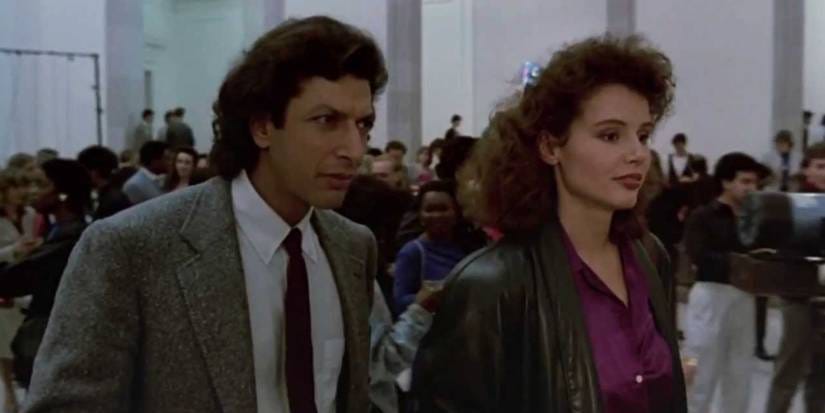
This entire film concerns itself with false pretenses. In the first minute, we encounter Seth Brundle, a socially awkward nerd playing as a suave socialite. He makes an attempt to get Veronica (the reporter…the supposed embodiment of truth and authenticity at the time) back to his place via the promise of a cappuccino. Not a ‘plastic dilettante’s machine’ but the real restaurant style. This is a man concerned with recognition and distinction. He is both precise and in his own way arrogant. Moments later, rebuffed, Seth insists he’s working on a project that will change the world. Veronica isn’t convinced, reminding him that of course, everyone says that. He insists:
Yeah, but they're lying. I'm not.
At Seth Brundle’s “lab,” we witness the misrepresentations again. It’s not a lab as much as a loft in a run-down building. Brundle and his lab, which doubles as his apartment, aren’t really much to look at. But it’s what’s inside that counts, right? These opening scenes carry a ton of weight when it comes to exposing the character and the themes we’ll be working with going forward.
These ideas of obfuscation and subterfuge continually drive the narrative.
Early on, Seth reveals that he doesn’t actually make any of this equipment. He farms it out. This reveals his expertise to be more of a management of ideas than a strict invention. He takes shortcuts. In therapist terms, he doesn’t ‘do the work’ as much as he expects others to do it for him when it’s more convenient.
Veronica doesn’t reveal her relationship with her editor, arguably the inciting event. It’s a simple thing, and perfectly reasonable, but it’s this moment that kicks off Seth’s manic reaction, leading to the fatal mistake of overlooking a fly in the pod.
Later, Veronica keeps the pregnancy a secret, under pressure to seek an abortion, reeling from the destruction of a toxic relationship. For his part, which is minimal, Stathis keeps his own secrets. Running with the story behind Veronica’s back, his ulterior motives are both obvious and manipulative.
The Change from Within
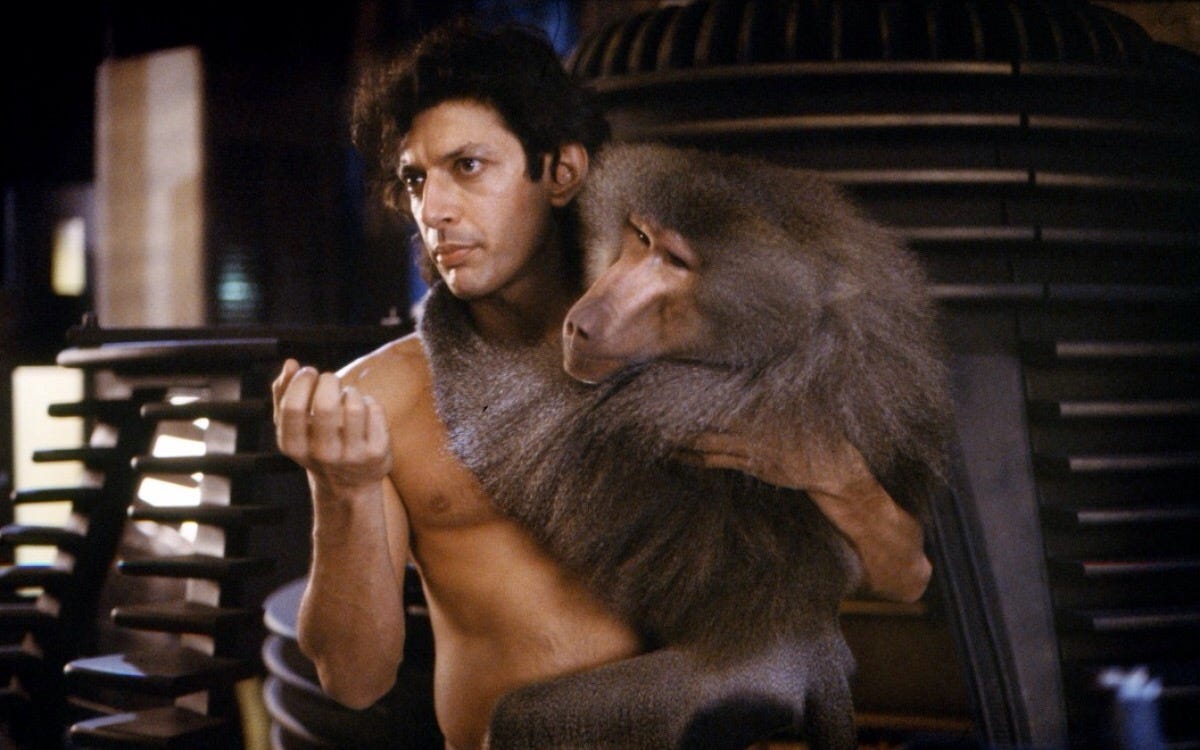
The middle of The Fly is an exploration of relationships. A Sci-Fi film by appearance, it really becomes clear just how much this story revolves around understanding human relationships and the bonds we make. As the young couple becomes more and more infatuated, they realize it’s only a matter of time. In this apartment, in this world, they can have everything they want, but the real world waits, and it threatens their happiness. Here, I think it’s interesting that The Fly chose teleportation as its central thematic element. Outside of the scientific convenience for introducing the fly, it serves no real purpose. It could have been anything at all in that lab, and nothing would have changed. However, we do see two characters with something in common: they need to make a leap.
Seth is trying to find a way to move from an unknown scientist toiling in obscurity to one of fame and renown. It’s his motivating purpose, which is critical to his personality. A well-developed ego and a desire for admiration perfectly highlight a budding narcissism. Veronica’s journey is more personal. She’s stuck in the middle ground of a bad relationship and a young career. She needs to move up; she needs to find a source of credibility for herself and an escape from the disgusting remnants of her ill-advised tryst with her boss. In this way, the teleportation pod is a beautiful metaphor. What they each want seems reasonable; it’s within reach, within sight…but the path is hidden. A puzzle they are both eager to solve and believe they have the answer for in each other. But like too many relationships built on passion and half-hidden backstories, and indeed the fly itself, it’s what we don’t see that is most dangerous.
Fly in the Ointment
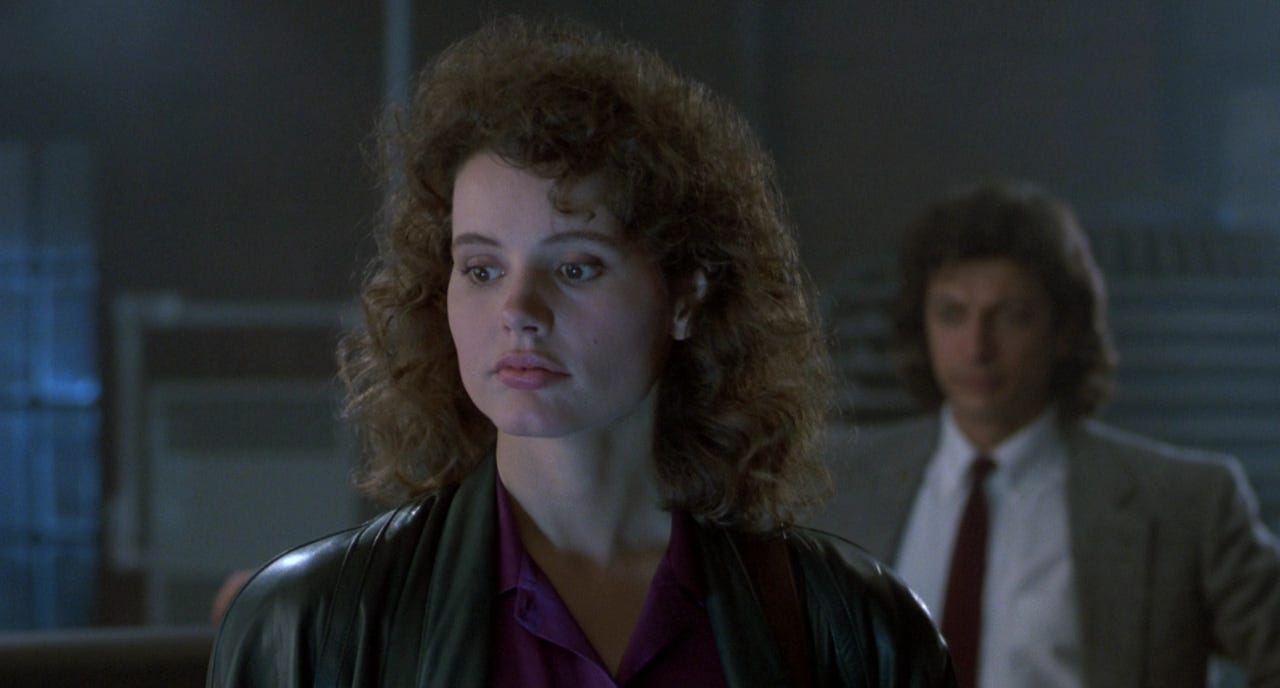
The entirety of this film can be brought to a single point. If there’s a pivotal moment, it lies in the decision Brundle makes, jealous, in a rage, unable to control his impulses. The insinuation is that he is inexperienced in matters of love.
This relationship has encouraged one of Brundle’s deepest needs: to be wanted. He needs to be acknowledged for his brilliance and celebrated for it. Veronica has given him that with the article on his achievement, but more importantly, her attention to him and willingness to love him on his terms. This simultaneously activates his paranoia and sends overcompensation into full effect.
The fly in this context, and in a larger metaphorical sense, comes down to something small…insignificant that finds its way in, and once inside, fuses with its host, deforms it, twists, and eventually destroys it. This works for a lot of ideas, such as drug addiction, or fear, or there are even credible parallels to The Fly as an allegory of the AIDS epidemic, and I think these are all valid. There’s room to see any number of metaphors that make a film interesting to watch, but I think what this film specifically manages to target and emulate so well is the destructive power of unchecked jealousy. Seth Brundle is an insecure man. Brilliant but emotionally unstable. He is jealous of his peers, even as he mocks them. He wants to be bigger than them, better than them. More popular than them. This egocentric attitude extends to his relationship, which is another source of positive feedback for him, but he’s afraid of the implications…he’s afraid of the vulnerability, and it drives a deep jealousy. That jealousy, that thought that comes to him alone in the night, inebriated and insecure, is the fly that gets inside. Once the eggs are laid, there’s no cure for Seth. He can only slowly decay and rot as the disease takes him over. He never gets the appropriate treatment, he refuses to acknowledge the disease for what it is, and it becomes his ruin. At its core, The Fly is an extreme case of insecure masculine jealousy gone wildly wrong.
Pivotal Text
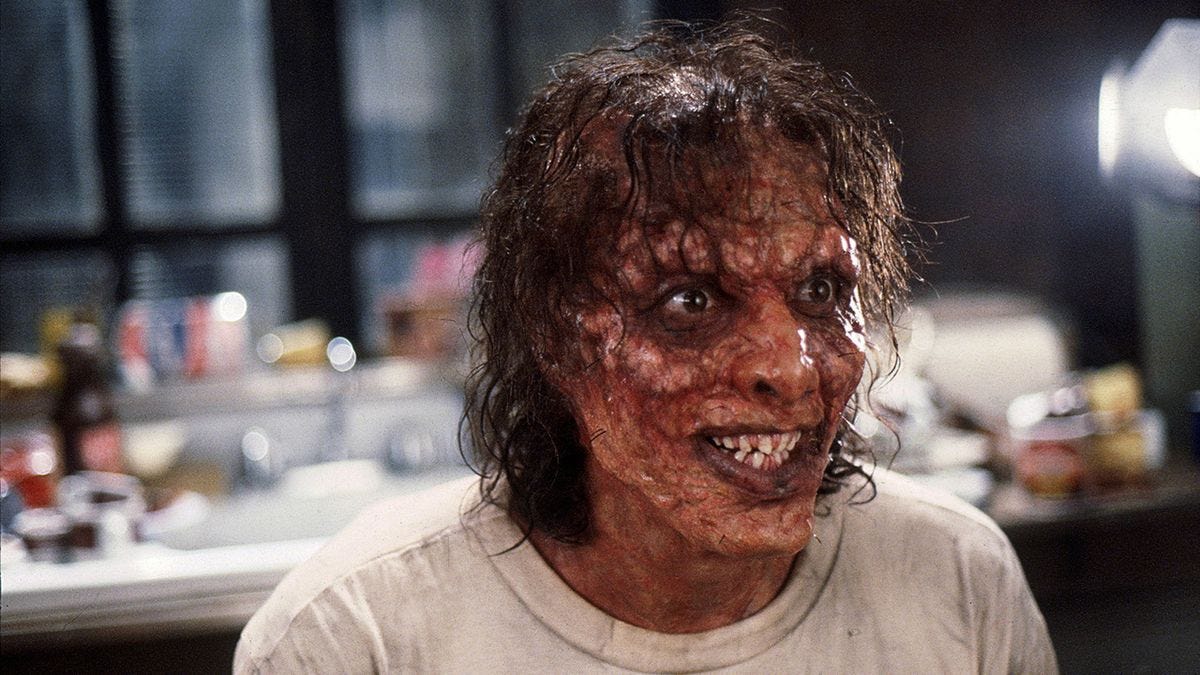
We always look for this moment, and in my opinion, it’s laid out as plain as possible, right on cue before the climax.
“I’ll hurt you if you stay.”
Seth knows the truth. He’s seen the decline continue after Veronica left. He’s convinced himself his degradation is not a disease, not a flaw in his DNA…it’s an evolution. The process is complete. “Brundlefly” is a new thing, one that is realizing it no longer adheres to social rules. Seth opines about the laws of the insect world. A world free of empathy and love, most notably. Consumed by his affliction, he can choose to seek help and perhaps reverse the process, but Brundle would have to admit his own error. And this is the one thing he can’t do. It would expose him to ridicule, and it would embarrass him in front of Veronica. He must convince the world that the flaw is a feature. That this mutation into a sub-human organism is actually a form of extraordinary evolution. Ultimately, his denial will kill him.
Fusion
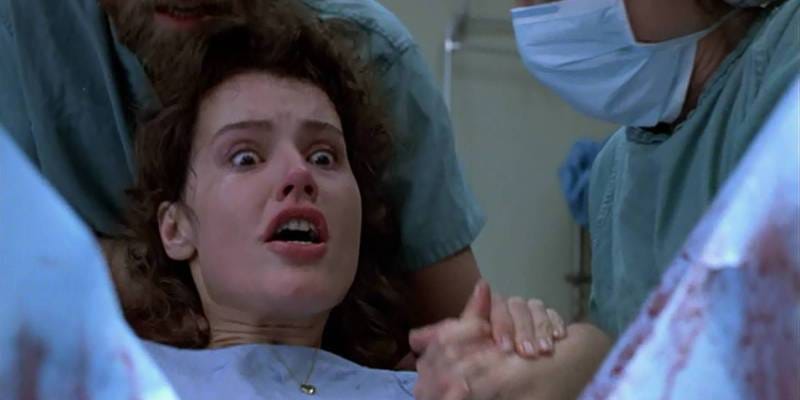
At the end of the film, we return to the relationship parallels to explore our arriving climax. Veronica is terrified of the repercussions of her newest toxic relationship. The pregnancy is an opportunity to lean into the effects of trauma and abuse. Carrying the sickness that has invaded Seth with her, being forced to live with it, incubating that damage, and then releasing it into the world. Meanwhile, Seth sees this as his opportunity. What Veronica considers a nightmare to be purged, Seth sees as a union that will finally defeat his greatest fear…being left alone. Not far removed from the have a baby to save a marriage trope, which is universally a bad idea, Brundle is looking for ways to force a bond with Veronica, and if he can’t find one, he’ll make one. The narcissist is, after all, a creature of power and control. It is here that Seth finally relinquishes any humanity he clung to.
"I'm an insect who dreamt he was a man and loved it. But now the dream is over... and the insect is awake."
He has accepted his fate. But it hasn’t dimmed his enthusiasm for getting everything he wants. To Seth, his monstrous appearance and his impending death are nothing but obstacles. He lacks the empathy to understand what has occurred and what damage it is causing.
Reckoning
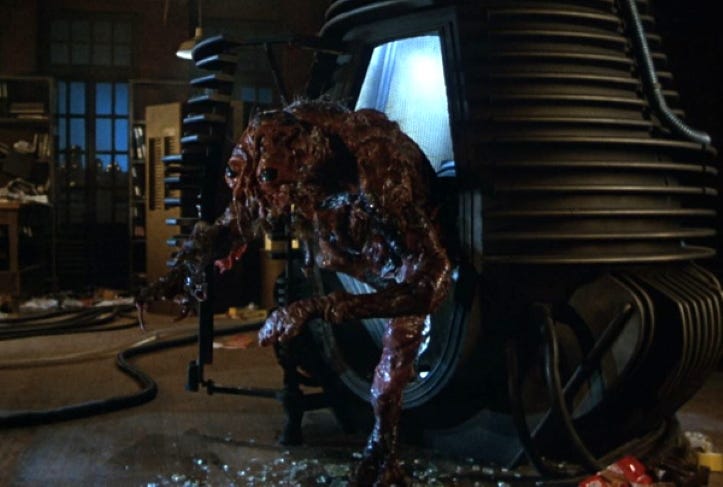
At the end, we finally see the culmination of this path. Brundle has fully corrupted into a thing that cannot be saved. It no longer resembles a human and has crossed the line of humanity in the process. He’s a cold killer. At the apex, as Brundlefly finally comes to terms with the impossibility of his desires, he relents. He has tried time and time again to force his will on the world, but the world fought back. It is too late. The damage is irreversible now. Only in this precise moment do you see the acceptance, and Brundle, having lost everything in his mad quest for control, begs to be put out of his misery. Once again traumatizing those he loves, and ending a long, terrible journey.